Buy degustation.eu ?
We are moving the project
degustation.eu .
Are you interested in purchasing the domain
degustation.eu ?
domain@kv-gmbh.de · 0541-91531010
Buy degustation.eu ?
Is the centripetal force the same as the centripetal acceleration?
No, the centripetal force and centripetal acceleration are not the same. Centripetal force is the force that keeps an object moving in a circular path, directed towards the center of the circle. Centripetal acceleration, on the other hand, is the acceleration of an object moving in a circular path, directed towards the center of the circle. While they both play a role in circular motion, they are distinct concepts with different physical meanings. **
What is the difference between centripetal force and centripetal acceleration?
Centripetal force is the force that keeps an object moving in a circular path, directed towards the center of the circle. It is responsible for changing the direction of the object's velocity. On the other hand, centripetal acceleration is the acceleration experienced by an object moving in a circular path, directed towards the center of the circle. It is caused by the centripetal force acting on the object. In summary, centripetal force is the force that causes centripetal acceleration in an object moving in a circular path. **

Similar search terms for Centripetal
Top-Angebote
Products related to Centripetal:
-
Dell Universal Pairing Receiver WR221 Titan GreyCompact wireless receiver compatible with Dell keyboards and mice using 2.4 GHz RF technology. Connects via USB and supports universal pairing with multiple Dell peripheral models, backed by a 1-year manufacturer warranty.20,99 £*Shipping: 0,00 £Secure redirect to the provider
-
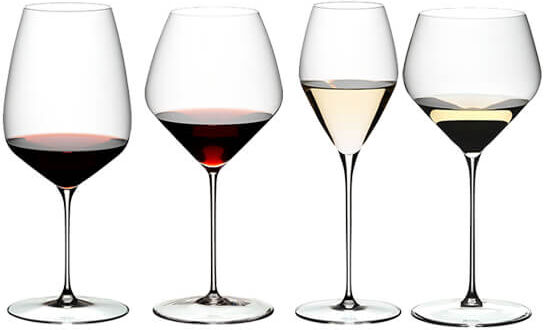
Riedel Veloce Tasting SetThe Riedel Veloce Tasting Set comprises: 1 x Riedel Veloce Cabernet, 1 x Riedel Veloce Pinot Noir, 1 x Riedel Veloce Sauvignon Blanc & 1 x Riedel Veloce Chardonnay glass. Part of the Riedel Veloce range, an impressive development based on state-of-the-art technology from Riedel’s own factory. The series uses the latest manufacturing technology to create products that feel handmade but offer the precision of machine production. With a lighter and finer profile, the glasses are ideal for new world wines and feature a 100mm diameter base inscribed with the designated grape variety. Dishwasher safe.100,00 £*Shipping: 0,00 £Secure redirect to the provider
-
Riedel Sommeliers Blind Tasting GlassDesigned to remove visual influence from wine tasting, the Riedel Sommeliers Blind Tasting Glass allows aroma, texture and flavour to take centre stage. Made from solid black crystal, the opaque finish encourages a more focused, sensory‑led tasting experience, making it well suited to blind tastings, training sessions and informal challenges at home. With a 380ml capacity, the egg‑shaped bowl gives wines ample space to develop and release aroma, while the 22.6cm height provides a well‑balanced, stemmed profile that feels comfortable and controlled in use. The rounded shape supports aromatic expression while keeping the tasting neutral and unbiased. Handmade from crystal by skilled glassmakers, each piece carries subtle variations that reflect its artisanal production. As part of Riedel’s original Sommeliers collection, the glass follows a function‑first design approach and is dishwasher safe for practical use. Supplied as a single glass.88,00 £*Shipping: 0,00 £Secure redirect to the provider



-
What is the difference between centripetal force, centripetal acceleration, and angular velocity?
Centripetal force is the force that keeps an object moving in a circular path towards the center of the circle. Centripetal acceleration is the acceleration of an object moving in a circular path, directed towards the center of the circle. Angular velocity, on the other hand, is the rate at which an object rotates around a fixed point, measured in radians per second. In summary, centripetal force is the force that keeps an object in circular motion, centripetal acceleration is the acceleration towards the center of the circle, and angular velocity is the rate of rotation around a fixed point. **
-
Which bodies use centripetal force?
Centripetal force is used by various bodies in different scenarios. Some common examples include the Earth revolving around the Sun, a car turning around a curve, a ball spinning on a string, and a satellite orbiting a planet. In each of these cases, centripetal force is required to keep the body moving in a curved path rather than a straight line. **
-
Who invented the centripetal force?
The concept of centripetal force was first described by Isaac Newton in his book "Mathematical Principles of Natural Philosophy" in 1687. Newton's work laid the foundation for understanding the motion of objects in circular paths and the force required to keep them in that motion. While Newton is credited with the concept of centripetal force, it is important to note that the understanding of circular motion and the forces involved has evolved over time with contributions from many scientists and mathematicians. **
-
What is the centripetal acceleration?
Centripetal acceleration is the acceleration experienced by an object moving in a circular path. It is directed towards the center of the circle and its magnitude is given by the formula a = v^2/r, where v is the velocity of the object and r is the radius of the circle. This acceleration is necessary to keep an object moving in a circular path, as it constantly changes the direction of the object's velocity. **

Which bodies use the centripetal force?
Centripetal force is used by various bodies in circular motion, such as a car going around a curve, a planet orbiting a star, or a ball on a string being swung in a circle. This force is necessary to keep these bodies moving in a curved path instead of continuing in a straight line. It is always directed towards the center of the circular path and is responsible for maintaining the object's acceleration towards the center. **
Which bodies utilize the centripetal force?
Bodies that move in a circular path or a curved trajectory utilize centripetal force. This force is necessary to keep an object moving in a circular motion by continuously pulling it towards the center of the circle. Examples of bodies that utilize centripetal force include planets orbiting around the sun, cars navigating a curved road, and a ball on a string being swung in a circular motion. **
Top-Angebote
Products related to Centripetal:
-
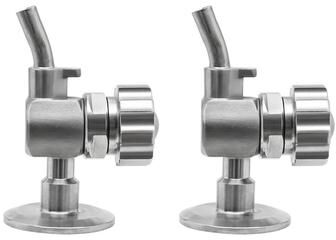
Multicon Wholesale Hub Stainless Steel Sampling Valve For Homebrewing Clamp End Valve Stainless Steel Sampling Valve For Homebrewing Clamp End ValveUnlock precise liquid sampling with the 2 PCS Stainless Steel Sampling Valve designed specifically for homebrewers and brewery enthusiasts. Made with SS304 stainless steel, these valves offer superior durability, ensuring years of rustfree, reliable...239,97 $*Shipping: 0,00 $Secure redirect to the provider
-
Dell Universal Pairing Receiver WR221 Titan GreyCompact wireless receiver compatible with Dell keyboards and mice using 2.4 GHz RF technology. Connects via USB and supports universal pairing with multiple Dell peripheral models, backed by a 1-year manufacturer warranty.20,99 £*Shipping: 0,00 £Secure redirect to the provider
-
Is the centripetal force the same as the centripetal acceleration?
No, the centripetal force and centripetal acceleration are not the same. Centripetal force is the force that keeps an object moving in a circular path, directed towards the center of the circle. Centripetal acceleration, on the other hand, is the acceleration of an object moving in a circular path, directed towards the center of the circle. While they both play a role in circular motion, they are distinct concepts with different physical meanings. **
-
What is the difference between centripetal force and centripetal acceleration?
Centripetal force is the force that keeps an object moving in a circular path, directed towards the center of the circle. It is responsible for changing the direction of the object's velocity. On the other hand, centripetal acceleration is the acceleration experienced by an object moving in a circular path, directed towards the center of the circle. It is caused by the centripetal force acting on the object. In summary, centripetal force is the force that causes centripetal acceleration in an object moving in a circular path. **
-
What is the difference between centripetal force, centripetal acceleration, and angular velocity?
Centripetal force is the force that keeps an object moving in a circular path towards the center of the circle. Centripetal acceleration is the acceleration of an object moving in a circular path, directed towards the center of the circle. Angular velocity, on the other hand, is the rate at which an object rotates around a fixed point, measured in radians per second. In summary, centripetal force is the force that keeps an object in circular motion, centripetal acceleration is the acceleration towards the center of the circle, and angular velocity is the rate of rotation around a fixed point. **
-
Which bodies use centripetal force?
Centripetal force is used by various bodies in different scenarios. Some common examples include the Earth revolving around the Sun, a car turning around a curve, a ball spinning on a string, and a satellite orbiting a planet. In each of these cases, centripetal force is required to keep the body moving in a curved path rather than a straight line. **
Similar search terms for Centripetal
-
Riedel Veloce Tasting SetThe Riedel Veloce Tasting Set comprises: 1 x Riedel Veloce Cabernet, 1 x Riedel Veloce Pinot Noir, 1 x Riedel Veloce Sauvignon Blanc & 1 x Riedel Veloce Chardonnay glass. Part of the Riedel Veloce range, an impressive development based on state-of-the-art technology from Riedel’s own factory. The series uses the latest manufacturing technology to create products that feel handmade but offer the precision of machine production. With a lighter and finer profile, the glasses are ideal for new world wines and feature a 100mm diameter base inscribed with the designated grape variety. Dishwasher safe.100,00 £*Shipping: 0,00 £Secure redirect to the provider
-
Riedel Sommeliers Blind Tasting GlassDesigned to remove visual influence from wine tasting, the Riedel Sommeliers Blind Tasting Glass allows aroma, texture and flavour to take centre stage. Made from solid black crystal, the opaque finish encourages a more focused, sensory‑led tasting experience, making it well suited to blind tastings, training sessions and informal challenges at home. With a 380ml capacity, the egg‑shaped bowl gives wines ample space to develop and release aroma, while the 22.6cm height provides a well‑balanced, stemmed profile that feels comfortable and controlled in use. The rounded shape supports aromatic expression while keeping the tasting neutral and unbiased. Handmade from crystal by skilled glassmakers, each piece carries subtle variations that reflect its artisanal production. As part of Riedel’s original Sommeliers collection, the glass follows a function‑first design approach and is dishwasher safe for practical use. Supplied as a single glass.88,00 £*Shipping: 0,00 £Secure redirect to the provider
-
Cheungs Pecara Cat Pairing Romantic Cast Iron Wall Hook - N/AHandcrafted from premium cast iron, the Pecara Cat Pairing Wall Hook combines clean design with everyday function. The minimalist cat silhouette adds subtle character without feeling busy.22,19 $*Shipping: 0,00 $Secure redirect to the provider
-
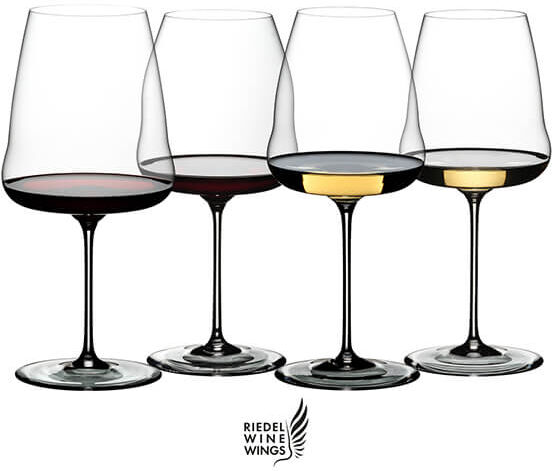
Riedel Winewings Set of 4 Tasting GlassesThe Riedel Winewings Set of Four Tasting Glasses contains the following: 1 x Riedel Winewings Cabernet Sauvignon Glass, 1 x Riedel Winewings Pinot Noir/ Nebbiolo Glass, 1 x Riedel Winewings Sauvignon Blanc Glass and 1 x Riedel Winewings Chardonnay Glass. The Cabernet Sauvignon glass is perfect for full-bodied, complex red wines that are high in tannin. The Pinot Noir glass is perfect for light-bodied red wines with high acidity and moderate tannin. The Sauvignon Blanc glass is perfect for all styles of this variety, from the grassy, fruit-forward wines of the Marlborough to the oak-aged, honeyed blends from Bordeaux. The Chardonnay glass is perfect to reveal the intensity of full-bodied white wines, including the wine's multi-layered aromas. Riedel Winewings Cabernet Sauvignon Glass capacity: 820ml. Riedel Winewings Pinot Noir/ Nebbiolo Glass capacity: 950ml capacity. Riedel Winewings Sauvignon Blanc Glass capacity: 865ml. Part of the Riedel Winewings series. Dishwasher safe. Ideal for the true wine connoisseur, Riedel Winewings glasses emphasise the minerality of the wine, perfect for the wine drinker who prefers wines with depth and complexity. Riedel Winewings is a stunning collection by Georg Riedel. Georg’s swansong series is the culmination of 47 years working in the family business, designing products to enhance the enjoyment of beverages on the way to becoming the father of functional glassware. Asked by a customer in 2018 to create the ultimate glass for Cabernet Sauvignon, the following 12 months consisted of many tastings and changes to glass shape, size and rim diameter until Riedel Winewings literally took flight. Flat-bottomed and reminiscent of an aircraft wing, complete with winglets, Riedel Winewings is described by Georg as “brutally functional, taking the wine’s aromas and flavours on a flight.” Describing the reasoning behind this brutally functional design, Georg says “I chose a flat and stretched bottom with a wing-l ike shape as it increases the surface area of the wine exposed to oxygen. This leads to greater levels of evaporation and enables a greater intensity of aroma. When positioning one’s head to the glass, the nose is closer to the exposed and wider surface of the wine. This alone would not fully deliver the optimal aroma of each grape variety so, to capture the delicate layered aromas, it was necessary to curve the glass walls and to correctly calibrate the opening of each glass with its rim diameter.”112,00 £*Shipping: 0,00 £Secure redirect to the provider
-
Who invented the centripetal force?
The concept of centripetal force was first described by Isaac Newton in his book "Mathematical Principles of Natural Philosophy" in 1687. Newton's work laid the foundation for understanding the motion of objects in circular paths and the force required to keep them in that motion. While Newton is credited with the concept of centripetal force, it is important to note that the understanding of circular motion and the forces involved has evolved over time with contributions from many scientists and mathematicians. **
-
What is the centripetal acceleration?
Centripetal acceleration is the acceleration experienced by an object moving in a circular path. It is directed towards the center of the circle and its magnitude is given by the formula a = v^2/r, where v is the velocity of the object and r is the radius of the circle. This acceleration is necessary to keep an object moving in a circular path, as it constantly changes the direction of the object's velocity. **
-
Which bodies use the centripetal force?
Centripetal force is used by various bodies in circular motion, such as a car going around a curve, a planet orbiting a star, or a ball on a string being swung in a circle. This force is necessary to keep these bodies moving in a curved path instead of continuing in a straight line. It is always directed towards the center of the circular path and is responsible for maintaining the object's acceleration towards the center. **
-
Which bodies utilize the centripetal force?
Bodies that move in a circular path or a curved trajectory utilize centripetal force. This force is necessary to keep an object moving in a circular motion by continuously pulling it towards the center of the circle. Examples of bodies that utilize centripetal force include planets orbiting around the sun, cars navigating a curved road, and a ball on a string being swung in a circular motion. **
* All prices are inclusive of VAT and, if applicable, plus shipping costs. The offer information is based on the details provided by the respective shop and is updated through automated processes. Real-time updates do not occur, so deviations can occur in individual cases. ** Note: Parts of this content were created by AI.