Buy degustation.eu ?
We are moving the project
degustation.eu .
Are you interested in purchasing the domain
degustation.eu ?
domain@kv-gmbh.de · 0541-91531010
Buy degustation.eu ?
How can one make a crucible oneself?
To make a crucible oneself, one can start by obtaining a heat-resistant material such as clay, graphite, or silicon carbide. Then, the material can be shaped into a small, cylindrical container with a flat bottom and tall sides. The container can be fired in a kiln or furnace to harden the material and make it heat-resistant. Finally, the crucible can be cooled and then used for melting and casting metals or other high-temperature applications. **
At what temperature does a graphite crucible glow?
A graphite crucible will start to glow red at temperatures above 700 degrees Celsius. As the temperature increases, the intensity of the glow will also increase. At temperatures around 1000 degrees Celsius, the graphite crucible will emit a bright orange glow. **

Similar search terms for Crucible
Top-Angebote
Products related to Crucible:
-
Dell Universal Pairing Receiver WR221 Titan GreyCompact wireless receiver compatible with Dell keyboards and mice using 2.4 GHz RF technology. Connects via USB and supports universal pairing with multiple Dell peripheral models, backed by a 1-year manufacturer warranty.20,99 £*Shipping: 0,00 £Secure redirect to the provider
-
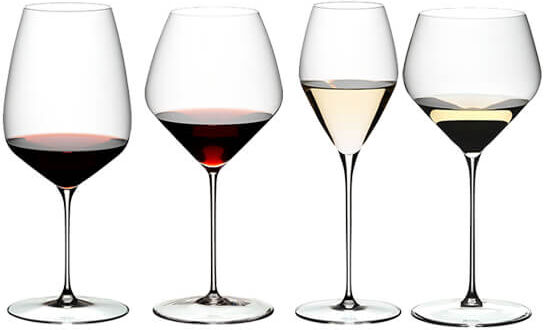
Riedel Veloce Tasting SetThe Riedel Veloce Tasting Set comprises: 1 x Riedel Veloce Cabernet, 1 x Riedel Veloce Pinot Noir, 1 x Riedel Veloce Sauvignon Blanc & 1 x Riedel Veloce Chardonnay glass. Part of the Riedel Veloce range, an impressive development based on state-of-the-art technology from Riedel’s own factory. The series uses the latest manufacturing technology to create products that feel handmade but offer the precision of machine production. With a lighter and finer profile, the glasses are ideal for new world wines and feature a 100mm diameter base inscribed with the designated grape variety. Dishwasher safe.100,00 £*Shipping: 0,00 £Secure redirect to the provider
-
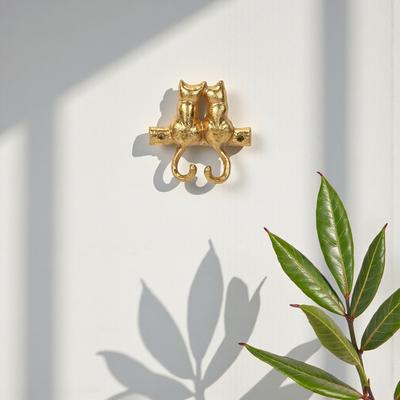
Cheungs Pecara Cat Pairing Romantic Cast Iron Wall Hook - N/AHandcrafted from premium cast iron, the Pecara Cat Pairing Wall Hook combines clean design with everyday function. The minimalist cat silhouette adds subtle character without feeling busy.21,52 $*Shipping: 0,00 $Secure redirect to the provider


-
How can one produce graphite for a crucible?
Graphite for a crucible can be produced through a process called graphitization. This involves heating carbon materials, such as petroleum coke or coal tar pitch, to high temperatures in a controlled environment. The carbon material is first heated to around 3000 degrees Celsius to create a carbonized product, and then further heated to around 2500 degrees Celsius to convert it into graphite. This process allows for the carbon atoms to rearrange into the crystalline structure of graphite, resulting in a material with high thermal stability and resistance to chemical corrosion, making it suitable for use in crucibles. **
-
Can a flower pot be used as a crucible?
A flower pot is not typically designed to withstand the high temperatures required for melting metals or other materials, which is a key function of a crucible. Crucibles are usually made of materials such as ceramic, graphite, or metal that can withstand extreme heat. Using a flower pot as a crucible could result in the pot breaking or shattering due to the high temperatures, making it unsuitable for this purpose. It is recommended to use a proper crucible made of heat-resistant materials for any melting or high-temperature applications. **
-
Why can't you melt iron in a copper crucible?
You cannot melt iron in a copper crucible because iron has a much higher melting point than copper. Iron melts at around 1538°C, while copper melts at around 1085°C. This means that the copper crucible would melt before the iron reaches its melting point, making it impossible to contain the molten iron. Additionally, the two metals can form an alloy at high temperatures, which could contaminate the iron and affect its properties. **
-
Does a portion of magnesium shavings become heavier if you burn them in a crucible and only occasionally ventilate the crucible lid?
No, a portion of magnesium shavings does not become heavier if you burn them in a crucible and only occasionally ventilate the crucible lid. When magnesium burns, it combines with oxygen from the air to form magnesium oxide, which is a heavier compound than the original magnesium shavings. Therefore, the overall weight of the magnesium shavings will decrease as they burn and form magnesium oxide, rather than increase. Additionally, by occasionally ventilating the crucible lid, some of the magnesium oxide may escape as it is being formed, further reducing the overall weight of the shavings. **

How do you clean a crucible from sealing wax residue?
To clean a crucible from sealing wax residue, you can start by gently scraping off as much of the residue as possible using a non-abrasive tool, such as a wooden or plastic scraper. Then, you can heat the crucible to a temperature just above the melting point of the sealing wax, allowing the remaining residue to melt and be wiped away with a clean cloth or paper towel. Finally, you can wash the crucible with warm soapy water to remove any remaining wax residue. It's important to avoid using abrasive materials or harsh chemicals that could damage the crucible. **
Why do magnesium shavings become heavier when burned in a crucible?
When magnesium shavings are burned in a crucible, they react with oxygen in the air to form magnesium oxide. This chemical reaction results in the magnesium combining with oxygen atoms from the air, increasing the overall mass of the substance. Therefore, the magnesium shavings become heavier when burned in a crucible due to the addition of oxygen atoms from the air during the combustion process. **
Top-Angebote
Products related to Crucible:
-
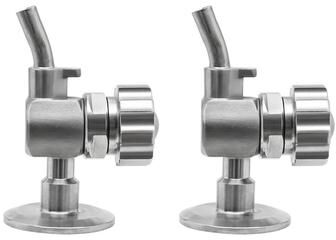
Multicon Wholesale Hub Stainless Steel Sampling Valve For Homebrewing Clamp End Valve Stainless Steel Sampling Valve For Homebrewing Clamp End ValveUnlock precise liquid sampling with the 2 PCS Stainless Steel Sampling Valve designed specifically for homebrewers and brewery enthusiasts. Made with SS304 stainless steel, these valves offer superior durability, ensuring years of rustfree, reliable...239,97 $*Shipping: 0,00 $Secure redirect to the provider
-
Dell Universal Pairing Receiver WR221 Titan GreyCompact wireless receiver compatible with Dell keyboards and mice using 2.4 GHz RF technology. Connects via USB and supports universal pairing with multiple Dell peripheral models, backed by a 1-year manufacturer warranty.20,99 £*Shipping: 0,00 £Secure redirect to the provider
-
How can one make a crucible oneself?
To make a crucible oneself, one can start by obtaining a heat-resistant material such as clay, graphite, or silicon carbide. Then, the material can be shaped into a small, cylindrical container with a flat bottom and tall sides. The container can be fired in a kiln or furnace to harden the material and make it heat-resistant. Finally, the crucible can be cooled and then used for melting and casting metals or other high-temperature applications. **
-
At what temperature does a graphite crucible glow?
A graphite crucible will start to glow red at temperatures above 700 degrees Celsius. As the temperature increases, the intensity of the glow will also increase. At temperatures around 1000 degrees Celsius, the graphite crucible will emit a bright orange glow. **
-
How can one produce graphite for a crucible?
Graphite for a crucible can be produced through a process called graphitization. This involves heating carbon materials, such as petroleum coke or coal tar pitch, to high temperatures in a controlled environment. The carbon material is first heated to around 3000 degrees Celsius to create a carbonized product, and then further heated to around 2500 degrees Celsius to convert it into graphite. This process allows for the carbon atoms to rearrange into the crystalline structure of graphite, resulting in a material with high thermal stability and resistance to chemical corrosion, making it suitable for use in crucibles. **
-
Can a flower pot be used as a crucible?
A flower pot is not typically designed to withstand the high temperatures required for melting metals or other materials, which is a key function of a crucible. Crucibles are usually made of materials such as ceramic, graphite, or metal that can withstand extreme heat. Using a flower pot as a crucible could result in the pot breaking or shattering due to the high temperatures, making it unsuitable for this purpose. It is recommended to use a proper crucible made of heat-resistant materials for any melting or high-temperature applications. **
Similar search terms for Crucible
-
Riedel Veloce Tasting SetThe Riedel Veloce Tasting Set comprises: 1 x Riedel Veloce Cabernet, 1 x Riedel Veloce Pinot Noir, 1 x Riedel Veloce Sauvignon Blanc & 1 x Riedel Veloce Chardonnay glass. Part of the Riedel Veloce range, an impressive development based on state-of-the-art technology from Riedel’s own factory. The series uses the latest manufacturing technology to create products that feel handmade but offer the precision of machine production. With a lighter and finer profile, the glasses are ideal for new world wines and feature a 100mm diameter base inscribed with the designated grape variety. Dishwasher safe.100,00 £*Shipping: 0,00 £Secure redirect to the provider
-
Cheungs Pecara Cat Pairing Romantic Cast Iron Wall Hook - N/AHandcrafted from premium cast iron, the Pecara Cat Pairing Wall Hook combines clean design with everyday function. The minimalist cat silhouette adds subtle character without feeling busy.21,52 $*Shipping: 0,00 $Secure redirect to the provider
-
Riedel Sommeliers Blind Tasting GlassDesigned to remove visual influence from wine tasting, the Riedel Sommeliers Blind Tasting Glass allows aroma, texture and flavour to take centre stage. Made from solid black crystal, the opaque finish encourages a more focused, sensory‑led tasting experience, making it well suited to blind tastings, training sessions and informal challenges at home. With a 380ml capacity, the egg‑shaped bowl gives wines ample space to develop and release aroma, while the 22.6cm height provides a well‑balanced, stemmed profile that feels comfortable and controlled in use. The rounded shape supports aromatic expression while keeping the tasting neutral and unbiased. Handmade from crystal by skilled glassmakers, each piece carries subtle variations that reflect its artisanal production. As part of Riedel’s original Sommeliers collection, the glass follows a function‑first design approach and is dishwasher safe for practical use. Supplied as a single glass.88,00 £*Shipping: 0,00 £Secure redirect to the provider
-
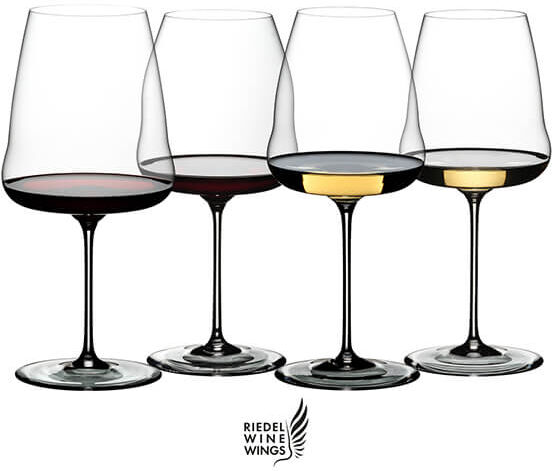
Riedel Winewings Set of 4 Tasting GlassesThe Riedel Winewings Set of Four Tasting Glasses contains the following: 1 x Riedel Winewings Cabernet Sauvignon Glass, 1 x Riedel Winewings Pinot Noir/ Nebbiolo Glass, 1 x Riedel Winewings Sauvignon Blanc Glass and 1 x Riedel Winewings Chardonnay Glass. The Cabernet Sauvignon glass is perfect for full-bodied, complex red wines that are high in tannin. The Pinot Noir glass is perfect for light-bodied red wines with high acidity and moderate tannin. The Sauvignon Blanc glass is perfect for all styles of this variety, from the grassy, fruit-forward wines of the Marlborough to the oak-aged, honeyed blends from Bordeaux. The Chardonnay glass is perfect to reveal the intensity of full-bodied white wines, including the wine's multi-layered aromas. Riedel Winewings Cabernet Sauvignon Glass capacity: 820ml. Riedel Winewings Pinot Noir/ Nebbiolo Glass capacity: 950ml capacity. Riedel Winewings Sauvignon Blanc Glass capacity: 865ml. Part of the Riedel Winewings series. Dishwasher safe. Ideal for the true wine connoisseur, Riedel Winewings glasses emphasise the minerality of the wine, perfect for the wine drinker who prefers wines with depth and complexity. Riedel Winewings is a stunning collection by Georg Riedel. Georg’s swansong series is the culmination of 47 years working in the family business, designing products to enhance the enjoyment of beverages on the way to becoming the father of functional glassware. Asked by a customer in 2018 to create the ultimate glass for Cabernet Sauvignon, the following 12 months consisted of many tastings and changes to glass shape, size and rim diameter until Riedel Winewings literally took flight. Flat-bottomed and reminiscent of an aircraft wing, complete with winglets, Riedel Winewings is described by Georg as “brutally functional, taking the wine’s aromas and flavours on a flight.” Describing the reasoning behind this brutally functional design, Georg says “I chose a flat and stretched bottom with a wing-l ike shape as it increases the surface area of the wine exposed to oxygen. This leads to greater levels of evaporation and enables a greater intensity of aroma. When positioning one’s head to the glass, the nose is closer to the exposed and wider surface of the wine. This alone would not fully deliver the optimal aroma of each grape variety so, to capture the delicate layered aromas, it was necessary to curve the glass walls and to correctly calibrate the opening of each glass with its rim diameter.”112,00 £*Shipping: 0,00 £Secure redirect to the provider
-
Why can't you melt iron in a copper crucible?
You cannot melt iron in a copper crucible because iron has a much higher melting point than copper. Iron melts at around 1538°C, while copper melts at around 1085°C. This means that the copper crucible would melt before the iron reaches its melting point, making it impossible to contain the molten iron. Additionally, the two metals can form an alloy at high temperatures, which could contaminate the iron and affect its properties. **
-
Does a portion of magnesium shavings become heavier if you burn them in a crucible and only occasionally ventilate the crucible lid?
No, a portion of magnesium shavings does not become heavier if you burn them in a crucible and only occasionally ventilate the crucible lid. When magnesium burns, it combines with oxygen from the air to form magnesium oxide, which is a heavier compound than the original magnesium shavings. Therefore, the overall weight of the magnesium shavings will decrease as they burn and form magnesium oxide, rather than increase. Additionally, by occasionally ventilating the crucible lid, some of the magnesium oxide may escape as it is being formed, further reducing the overall weight of the shavings. **
-
How do you clean a crucible from sealing wax residue?
To clean a crucible from sealing wax residue, you can start by gently scraping off as much of the residue as possible using a non-abrasive tool, such as a wooden or plastic scraper. Then, you can heat the crucible to a temperature just above the melting point of the sealing wax, allowing the remaining residue to melt and be wiped away with a clean cloth or paper towel. Finally, you can wash the crucible with warm soapy water to remove any remaining wax residue. It's important to avoid using abrasive materials or harsh chemicals that could damage the crucible. **
-
Why do magnesium shavings become heavier when burned in a crucible?
When magnesium shavings are burned in a crucible, they react with oxygen in the air to form magnesium oxide. This chemical reaction results in the magnesium combining with oxygen atoms from the air, increasing the overall mass of the substance. Therefore, the magnesium shavings become heavier when burned in a crucible due to the addition of oxygen atoms from the air during the combustion process. **
* All prices are inclusive of VAT and, if applicable, plus shipping costs. The offer information is based on the details provided by the respective shop and is updated through automated processes. Real-time updates do not occur, so deviations can occur in individual cases. ** Note: Parts of this content were created by AI.