Buy degustation.eu ?
We are moving the project
degustation.eu .
Are you interested in purchasing the domain
degustation.eu ?
domain@kv-gmbh.de · 0541-91531010
Buy degustation.eu ?
How can I externally distinguish an NPN transistor from a PNP transistor?
One way to externally distinguish an NPN transistor from a PNP transistor is by looking at the labeling on the transistor itself. NPN transistors will typically have the letters "NPN" or the symbol "->" printed on them, while PNP transistors will have "PNP" or the symbol "<-" printed on them. Another way is to check the pin configuration of the transistor. NPN transistors have their emitter connected to the negative side of the power supply, while PNP transistors have their emitter connected to the positive side. **
Is a transistor a crystal?
No, a transistor is not a crystal. A transistor is a semiconductor device that can amplify or switch electronic signals, while a crystal is a solid material with a regularly repeating atomic structure. Transistors are often made using semiconductor materials like silicon, which can have a crystalline structure, but the transistor itself is not considered a crystal. **


Similar search terms for Transistor
Top-Angebote
Products related to Transistor:
-
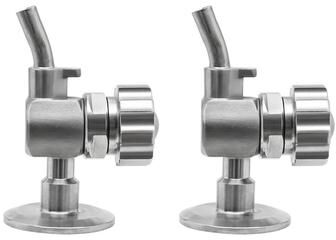
Multicon Wholesale Hub Stainless Steel Sampling Valve For Homebrewing Clamp End Valve Stainless Steel Sampling Valve For Homebrewing Clamp End ValveUnlock precise liquid sampling with the 2 PCS Stainless Steel Sampling Valve designed specifically for homebrewers and brewery enthusiasts. Made with SS304 stainless steel, these valves offer superior durability, ensuring years of rustfree, reliable...239,97 $*Shipping: 0,00 $Secure redirect to the provider
-
Dell Universal Pairing Receiver WR221 Titan GreyCompact wireless receiver compatible with Dell keyboards and mice using 2.4 GHz RF technology. Connects via USB and supports universal pairing with multiple Dell peripheral models, backed by a 1-year manufacturer warranty.20,99 £*Shipping: 0,00 £Secure redirect to the provider



-
How does a transistor work?
A transistor is a semiconductor device that can amplify or switch electronic signals. It consists of three layers of semiconductor material - the emitter, base, and collector. By applying a small current to the base, the transistor can control a much larger current flowing between the collector and emitter. This allows transistors to act as amplifiers by increasing the strength of a signal, or as switches by turning a signal on or off. **
-
Why does a transistor amplify?
A transistor amplifies because it can control the flow of current between its collector and emitter terminals by varying the current at its base terminal. This control allows a small input signal to modulate a larger output signal, resulting in amplification. The ability of the transistor to amplify is due to its ability to amplify and control the flow of current, making it a key component in electronic circuits for signal amplification and switching. **
-
How is a transistor installed?
A transistor is typically installed on a circuit board by soldering its leads onto the appropriate pads or holes on the board. The leads of the transistor are first bent to the correct shape and then inserted into the corresponding holes on the board. The leads are then soldered in place to ensure a secure electrical connection. Care must be taken to ensure that the transistor is oriented correctly according to the circuit diagram to ensure proper functionality. **
-
Which transistor do I need?
To determine which transistor you need, you should consider the specific requirements of your circuit. Factors to consider include the voltage and current requirements, the frequency of operation, and the type of signal being amplified or switched. Additionally, you should consider whether you need a bipolar junction transistor (BJT) or a field-effect transistor (FET) based on the application. Once you have a clear understanding of your circuit's requirements, you can select a transistor that meets those specifications. **


When is the transistor conducting?
A transistor is conducting when it is in the "on" state, allowing current to flow between its collector and emitter terminals. This occurs when a sufficient voltage is applied to the base terminal, causing the transistor to become forward-biased and allowing current to flow through it. In this state, the transistor acts as a closed switch, allowing the flow of current through it. **
What happens when a transistor amplifies?
When a transistor amplifies a signal, it increases the strength of the signal without significantly distorting it. This is achieved by controlling the flow of current between the collector and emitter terminals based on the current at the base terminal. The transistor acts as a switch that can be turned on and off rapidly, allowing it to amplify the input signal. Overall, the transistor amplifies the input signal by a factor known as the gain of the transistor. **
Top-Angebote
Products related to Transistor:
-
Northwest US Soccer Transistor Washable Rug - 20x32 inches"Make a bold statement in any room with the U.S. Soccer ""Transistor"" Washable Rug. Featuring a dynamic red-and-navy geometric pattern with the official USA shield and bold “USMNT” and “U.S."29,99 $*Shipping: 0,00 $Secure redirect to the provider
-
Helly Hansen Transistor Backpack Recco®, 30l - Blue/Purple - STDThe lightweight 30-liter Transistor backpack is a must-have for every outdoor adventure. Created with versatility and performance in mind, this performance pack has the features of a larger hiking pack in an easy-to-carry size. It’s fully hydration compatible. The Transistor also has dual ice axe and trekking pole attachments and a security pocket with key clip for safety. We added 3D air-mesh ventilation on the back panel for your comfort on the trail. A Recco® reflector helps you stay safe in the wilderness.150,00 £*Shipping: 0,00 £Secure redirect to the provider
-
Multicon Wholesale Hub Stainless Steel Sampling Valve For Homebrewing Clamp End Valve Stainless Steel Sampling Valve For Homebrewing Clamp End ValveUnlock precise liquid sampling with the 2 PCS Stainless Steel Sampling Valve designed specifically for homebrewers and brewery enthusiasts. Made with SS304 stainless steel, these valves offer superior durability, ensuring years of rustfree, reliable...239,97 $*Shipping: 0,00 $Secure redirect to the provider
-
How can I externally distinguish an NPN transistor from a PNP transistor?
One way to externally distinguish an NPN transistor from a PNP transistor is by looking at the labeling on the transistor itself. NPN transistors will typically have the letters "NPN" or the symbol "->" printed on them, while PNP transistors will have "PNP" or the symbol "<-" printed on them. Another way is to check the pin configuration of the transistor. NPN transistors have their emitter connected to the negative side of the power supply, while PNP transistors have their emitter connected to the positive side. **
-
Is a transistor a crystal?
No, a transistor is not a crystal. A transistor is a semiconductor device that can amplify or switch electronic signals, while a crystal is a solid material with a regularly repeating atomic structure. Transistors are often made using semiconductor materials like silicon, which can have a crystalline structure, but the transistor itself is not considered a crystal. **
-
How does a transistor work?
A transistor is a semiconductor device that can amplify or switch electronic signals. It consists of three layers of semiconductor material - the emitter, base, and collector. By applying a small current to the base, the transistor can control a much larger current flowing between the collector and emitter. This allows transistors to act as amplifiers by increasing the strength of a signal, or as switches by turning a signal on or off. **
-
Why does a transistor amplify?
A transistor amplifies because it can control the flow of current between its collector and emitter terminals by varying the current at its base terminal. This control allows a small input signal to modulate a larger output signal, resulting in amplification. The ability of the transistor to amplify is due to its ability to amplify and control the flow of current, making it a key component in electronic circuits for signal amplification and switching. **
Similar search terms for Transistor
-
Dell Universal Pairing Receiver WR221 Titan GreyCompact wireless receiver compatible with Dell keyboards and mice using 2.4 GHz RF technology. Connects via USB and supports universal pairing with multiple Dell peripheral models, backed by a 1-year manufacturer warranty.20,99 £*Shipping: 0,00 £Secure redirect to the provider
-
Riedel Veloce Tasting SetThe Riedel Veloce Tasting Set comprises: 1 x Riedel Veloce Cabernet, 1 x Riedel Veloce Pinot Noir, 1 x Riedel Veloce Sauvignon Blanc & 1 x Riedel Veloce Chardonnay glass. Part of the Riedel Veloce range, an impressive development based on state-of-the-art technology from Riedel’s own factory. The series uses the latest manufacturing technology to create products that feel handmade but offer the precision of machine production. With a lighter and finer profile, the glasses are ideal for new world wines and feature a 100mm diameter base inscribed with the designated grape variety. Dishwasher safe.100,00 £*Shipping: 0,00 £Secure redirect to the provider
-
Riedel Sommeliers Blind Tasting GlassDesigned to remove visual influence from wine tasting, the Riedel Sommeliers Blind Tasting Glass allows aroma, texture and flavour to take centre stage. Made from solid black crystal, the opaque finish encourages a more focused, sensory‑led tasting experience, making it well suited to blind tastings, training sessions and informal challenges at home. With a 380ml capacity, the egg‑shaped bowl gives wines ample space to develop and release aroma, while the 22.6cm height provides a well‑balanced, stemmed profile that feels comfortable and controlled in use. The rounded shape supports aromatic expression while keeping the tasting neutral and unbiased. Handmade from crystal by skilled glassmakers, each piece carries subtle variations that reflect its artisanal production. As part of Riedel’s original Sommeliers collection, the glass follows a function‑first design approach and is dishwasher safe for practical use. Supplied as a single glass.88,00 £*Shipping: 0,00 £Secure redirect to the provider
-
How is a transistor installed?
A transistor is typically installed on a circuit board by soldering its leads onto the appropriate pads or holes on the board. The leads of the transistor are first bent to the correct shape and then inserted into the corresponding holes on the board. The leads are then soldered in place to ensure a secure electrical connection. Care must be taken to ensure that the transistor is oriented correctly according to the circuit diagram to ensure proper functionality. **
-
Which transistor do I need?
To determine which transistor you need, you should consider the specific requirements of your circuit. Factors to consider include the voltage and current requirements, the frequency of operation, and the type of signal being amplified or switched. Additionally, you should consider whether you need a bipolar junction transistor (BJT) or a field-effect transistor (FET) based on the application. Once you have a clear understanding of your circuit's requirements, you can select a transistor that meets those specifications. **
-
When is the transistor conducting?
A transistor is conducting when it is in the "on" state, allowing current to flow between its collector and emitter terminals. This occurs when a sufficient voltage is applied to the base terminal, causing the transistor to become forward-biased and allowing current to flow through it. In this state, the transistor acts as a closed switch, allowing the flow of current through it. **
-
What happens when a transistor amplifies?
When a transistor amplifies a signal, it increases the strength of the signal without significantly distorting it. This is achieved by controlling the flow of current between the collector and emitter terminals based on the current at the base terminal. The transistor acts as a switch that can be turned on and off rapidly, allowing it to amplify the input signal. Overall, the transistor amplifies the input signal by a factor known as the gain of the transistor. **
* All prices are inclusive of VAT and, if applicable, plus shipping costs. The offer information is based on the details provided by the respective shop and is updated through automated processes. Real-time updates do not occur, so deviations can occur in individual cases. ** Note: Parts of this content were created by AI.